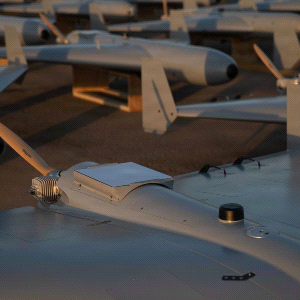
One-Way Attack Drones - Market and Technology Forecast to 2034
Market forecast by Region, Range, Guidance, and Payload. Country and Programme Analysis, Market and Technology Overview, Opportunity Analysis, and Leading Company Profiles
Market forecasts by Region, Launch Platform and System Type. Country Analysis, Market and Technology Overview, Opportunities and Growth Analysis, and Leading Company Profiles

The return of great power competition has placed hypersonic weapons firmly in the spotlight. With China asserting influence across the Indo-Pacific, Russia engaged in Ukraine and the High North, and high-speed strike technologies proliferating globally, hypersonic weapons have moved from experimental platforms to core elements of deterrence and precision strike strategies. In this environment, they are no longer simply advanced research projects but practical tools for penetrating layered air and missile defences and engaging time-sensitive, high-value targets.
Modern battlefields increasingly feature mobile launchers, hardened bunkers, and fast-moving naval forces, making traditional platforms more vulnerable. As a result, hypersonic weapons have become a priority for both offensive and defensive roles across major militaries. While the fundamental mission, such as rapid strike and deterrence, remains consistent, the underlying technologies are advancing rapidly. Key developments in propulsion, high-temperature materials, and autonomous guidance systems are enabling greater reliability and performance. The most significant emerging shift is toward affordable mass production, complemented by parallel efforts to develop effective hypersonic interceptors.
Not many countries are currently capable of producing operational hypersonic weapons; the number with genuine end-to-end capability can still be counted on one hand. A few more are expected to join this select group over the next decade, but a broad proliferation is unlikely. Instead, the trend points toward increased joint ventures and collaborative programmes, such as AUKUS and initiatives under the European Defence Fund. Most nations will prefer to leverage existing expertise rather than build sovereign capabilities from scratch. The hypersonic elements of the AUKUS submarine programme stand as a notable exception, driven by unique political and technological considerations.
Developing hypersonic weapons is a long-term endeavour. These programmes require years of sustained development, extensive and costly testing cycles, and careful life-cycle planning. Competition among manufacturers is intense, yet it differs markedly from typical commercial markets. National security imperatives consistently take precedence over short-term profit considerations. Ultimately, the winners in this domain will not be those with the strongest quarterly results, but those trusted by governments to deliver and sustain their most sensitive strategic capabilities.
Market Forecast’s study on hypersonic weapons has collected data on current inventories, ongoing programmes and analysed them to deliver a comprehensive forecast of the market, its subsystems, and evolving technologies over the 2026–2034 period.
Complete the form below and we will send sample pages for this study. Please use a business email address.
Explore additional studies connected to this study.
Market forecast by Region, Range, Guidance, and Payload. Country and Programme Analysis, Market and Technology Overview, Opportunity Analysis, and Leading Company Profiles
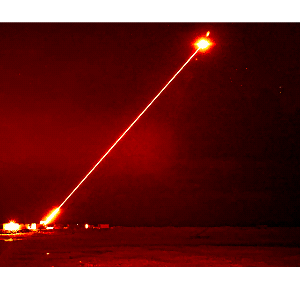
Market forecast by Region, Domain, Type, Lifecycle phase, and Deployment. Country Analysis, Market and Technology Overview, Critical Raw Materials, Opportunity Analysis, and Leading Company Profiles
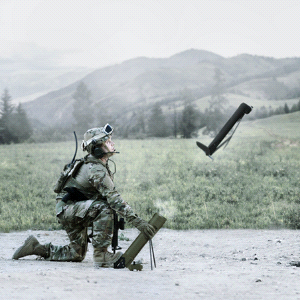
Market forecast by Region, Range, and Launch Platform. Country Analysis, Market and Technology Overview, Critical Raw Materials, Opportunity Analysis, and Leading Company Profiles
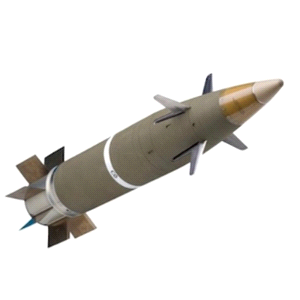
Market forecast by Regions, Calibre, Platform, and Product Format. Country Analysis, Market and Technology Overview, Critical Raw Materials, Opportunity Analysis, and Leading Company Profiles
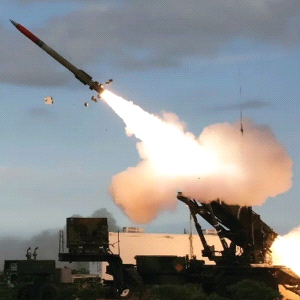
Market forecast by Regions, Types, Guidance systems, and Launch Platforms. Country Analysis, Market and Technology Overview, Critical Raw Materials, Opportunity Analysis, and Leading Company Profiles
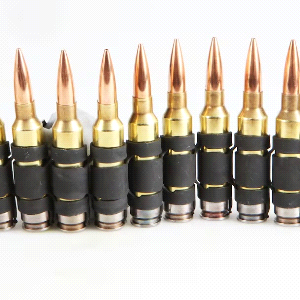
Market forecast by Region and Ammunition Calibre. Country Analysis, Market and Technology Overview including Critical Raw Materials, Opportunity Analysis, and Leading Company Profiles