
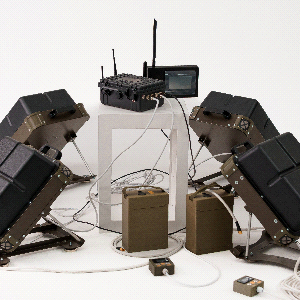
Military GNSS Anti-Jamming Systems - Market and Technology Forecast to 2034
Market forecast by Region, Domain, and Lifecycle Phase. Country and Programme Analysis, Market and Technology Overview, Opportunity Analysis, and Leading Company Profiles
Market forecast by Region, Domain, and Lifecycle Phase. Country and Procurement Programme Analysis, Market and Technology Overview, Supply Chain Assessment, Opportunity Analysis and Leading Company Profiles.

The use of artificial intelligence, machine learning and advanced data analytics is becoming increasingly common across the defence industry, moving beyond experimental applications towards integration into operational systems. Defence manufacturers and military organisations are incorporating these technologies into surveillance platforms, intelligence systems, radars, command-and-control infrastructure and weapon systems to improve information processing and operational effectiveness.
This growing adoption is creating the technological foundation for more sophisticated targeting and decision-support environments, where information can be processed, correlated and presented to decision-makers more quickly. It is also encouraging defence companies to expand their capabilities beyond conventional hardware development into AI software, data analytics, algorithm development and integrated digital solutions.
The “AI Targeting and Decision Support Systems – Market and Technology Forecast to 2034” study has identified that the adoption of AI in military targeting is driven primarily by operational necessity rather than simply by the availability of advanced technology. Traditional target-processing systems rely largely on predefined algorithms, databases, rules and operator inputs, which can be sufficient for predictable and well-defined operational requirements.
AI introduces additional capabilities, including the interpretation of complex data, identification of patterns, correlation of information from multiple sources and generation of analytical recommendations to support faster targeting decisions. Importantly, AI does not necessarily replace the underlying targeting system; instead, it enhances existing Automatic Target Recognition (ATR), Aided Target Recognition (AiTR), Command and Control (C2) and Intelligence, Surveillance and Target Acquisition (ISTA) platforms.
The study further identifies that the operational value of AI is greatest where conventional processing approaches face limitations arising from the speed, complexity and scale of military operations. These requirements include rapid target recognition and identification, multi-source intelligence fusion, processing of high volumes of target-related information, assessment of complex and evolving threats, and coordination of targeting decisions across multiple military domains. Consequently, AI adoption is expected to be selective, with defence organisations prioritising applications where intelligent processing and decision support deliver a measurable operational advantage.
The AI Targeting and Decision Support Systems market is segmented by Region, Domain, Lifecycle Phase.
By Region:
Complete the form below and we will send sample pages for this study. Please use a business email address.
Explore additional studies connected to this study.
Market forecast by Region, Domain, and Lifecycle Phase. Country and Programme Analysis, Market and Technology Overview, Opportunity Analysis, and Leading Company Profiles
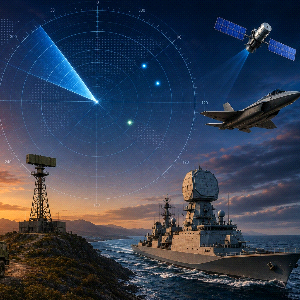
Market forecast by Region, Function, Domain, and Mobility. Country and Programme Analysis, Market and Technology Overview, Opportunity Analysis, and Leading Company Profiles
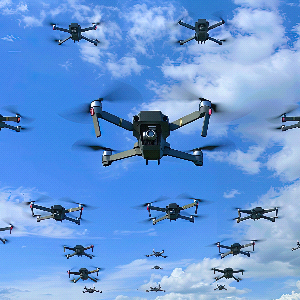
Market forecast by Region, System, and Application. Country and Programmes Analysis, Market and Technology Overview, Opportunity Analysis, and Leading Company Profiles
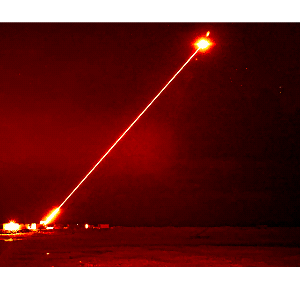
Market forecast by Region, Domain, Type, Lifecycle phase, and Deployment. Country Analysis, Market and Technology Overview, Critical Raw Materials, Opportunity Analysis, and Leading Company Profiles
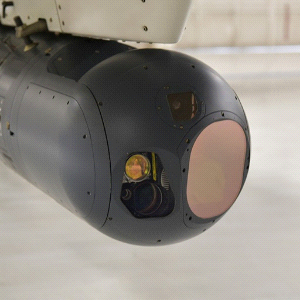
Market forecast by Region, Designator Pod, Platform, and End User. Country Analysis, Market and Technology Overview, Critical Raw Materials, Opportunity Analysis, and Leading Company Profiles
Market forecast by Regions, Platform, System, Integration, and Lifecycle Phase. Country Analysis, Market and Technology Overview, Critical Raw Materials, Opportunity Analysis, and Leading Company...